
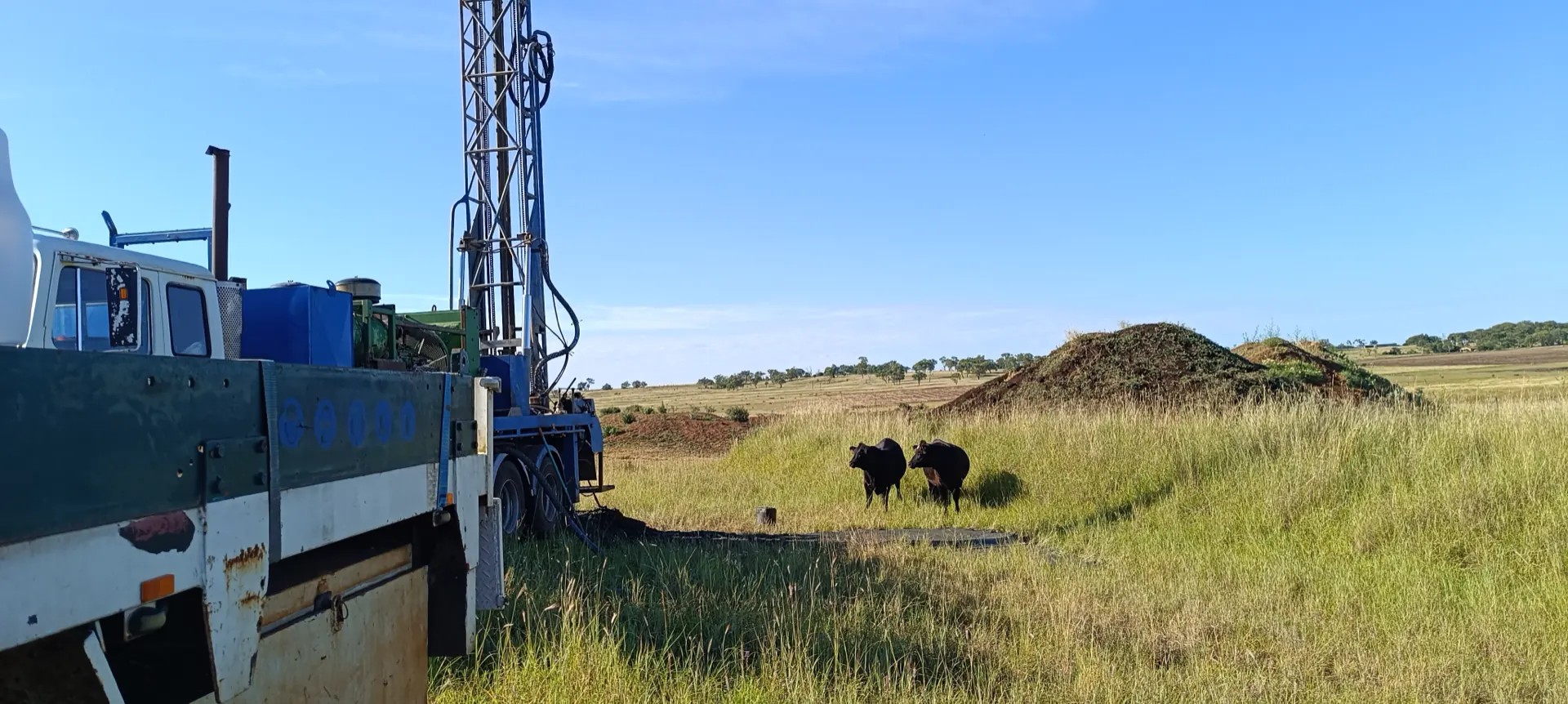
Stock Water Bores
Stock Water Bore Drilling Across the Darling Downs
When your stock and livelihood depend on water, you cannot afford to come up short. We drill stock bores for farms and grazing properties across the Darling Downs, Western Downs, Southern Downs, and beyond, built to keep producing through the dry.
Water Security
Water Security When the Surface Runs Dry
When the dams drop and the creeks stop running, the properties that keep going are the ones with a reliable bore.
A good stock bore is one of the most valuable pieces of infrastructure on a working property. It keeps water up to your livestock and takes the worry out of the next dry stretch. It is also a long-term asset that adds real value to your land.
We work with graziers, croppers, feedlots, and mixed operations right across the region, from the Darling Downs around Dalby and Pittsworth out through the Western Downs near Chinchilla and Miles. We understand that for you this is not a nice-to-have, it is a production decision, and we treat it that way.
What We Do
The Right Bore for the Job, Done Properly
Stock bores often need to deliver serious volume, sometimes from deep aquifers. That takes the right method, the right gear, and a driller who knows the country. Whether you call it a stock bore or a water well, we handle the whole job from assessment through to a finished, compliant bore.
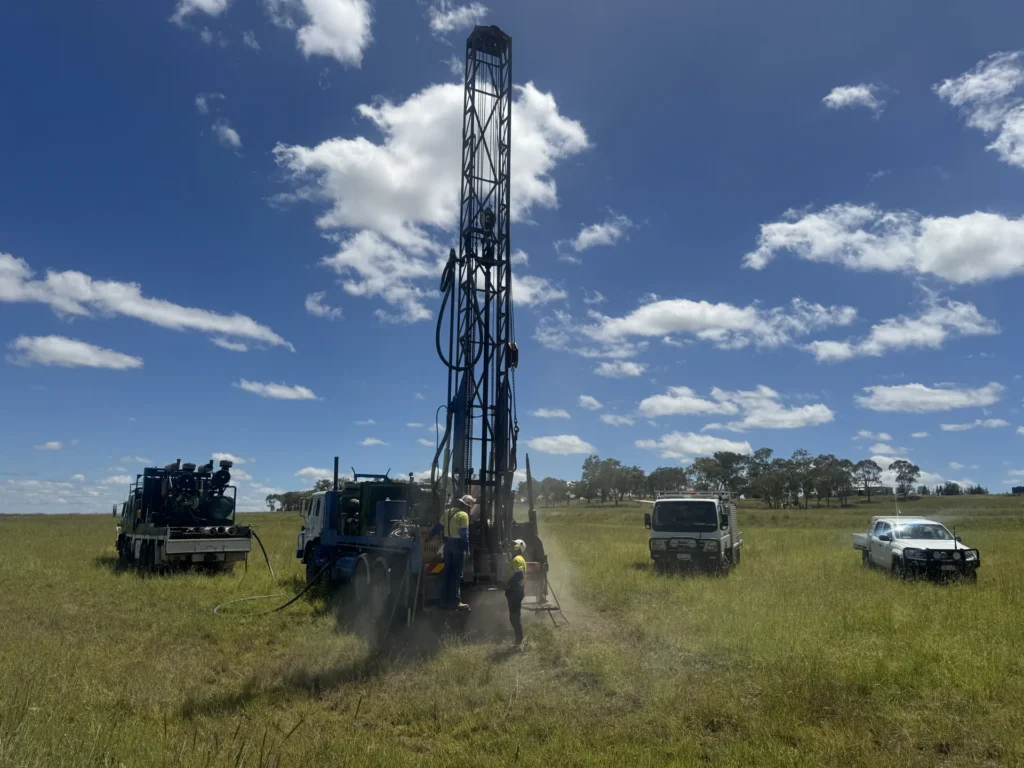
Local Knowledge of the Country
We have drilled across this region for years and know what it takes to construct a bore that’s fully compliant and built to perform. That local experience is the difference between a hassle-free project and a costly headache.
Air and Mud Rotary Drilling
We are fully endorsed for both rotary air and rotary mud drilling. By matching the method to your specific ground formation, we deliver the best possible result across harder, deeper, or more variable country.
Stock Bore Construction
For stock bores, yield is everything. We construct bores to deliver and to last, built to the Minimum Construction Requirements, so you are left with a compliant, productive bore.
Proof On the Ground
A Job That Shows What We Can Do
43,000 Litres an Hour from the Great Artesian Basin
We were contracted to drill a production bore for the Lemon Tree Feedlot, supplying water from the Great Artesian Basin for intensive livestock operations. The feedlot required a minimum of 8 litres per second, around 29,000 litres an hour, to operate effectively.
The completed bore significantly exceeded the required rate, delivering 43,000 litres an hour of excellent quality water. The biggest challenge on the day was managing the sheer volume of water produced while finalising the bore construction. The client was extremely happy, and the bore continues to perform exactly as intended.
43,000
litres an hour delivered
29,000
litres an hour required
GAB
Great Artesian Basin supply
Funding Help
You May Be Able to Claim Part of the Cost
If you are a primary producer, a new stock bore may be eligible for government drought-preparedness funding, which can cover part of the cost of the job.
QRIDA Drought Preparedness Grant
The Queensland Government’s Drought Preparedness Grant can cover up to 25% of the cost of eligible drought-preparedness infrastructure, including drilling a new working bore, up to a maximum of $50,000 in total, excluding GST. Eligibility and conditions apply. Applications are closed for 2026-2027, and QRIDA expects the grant to reopen on 1 July 2027. Check the official QRIDA page for the current status.
We can talk you through how a bore fits into a grant application. See our Government Grants & Funding page for the current details.
What It Costs
What Affects the Cost of a Stock Bore?
Stock bores vary more than most, because they often ask more of the ground. The main things that drive the price:
01
Depth to the Supply You Need
The biggest factor is how deep we have to go to intersect water that meets your target. Hit a good supply shallow and the job is straightforward. On other sites we drill a lot deeper to reach a usable, reliable supply, and that adds to the cost.
02
Your Yield and Quality Target
Stock bores often need to deliver both high volume and reliable water quality to keep a large herd through a dry spell without missing a beat.
03
The Geology, and Whether Mud Drilling Is Needed
We are at the mercy of the ground. Some areas can be drilled in air. Alluvial formations require mud drilling, which is a more involved process and raises costs. When mud drilling is required, jobs start at a higher rate.
Every site is different, so this is a starting point, not a quote. The only accurate figure is one based on your property, the yield you need, and the ground we are working with. Request a quote and we will come back to you with a clear, no-pressure figure.
Common Questions
The Things Producers Ask Us
Straight answers for producers. There are more on our FAQ page, or ask us your own. Need water for domestic purposes? See domestic water bores.
It depends on the aquifer under your property. Some country delivers serious volume, like the Lemon Tree job where we achieved 43,000 litres an hour against a required 29,000. Other sites are more modest. We give you an honest assessment of what is realistic for your location before you commit.
Stock bores generally start from around $10,000 + GST, but they vary widely with depth, the yield you need, and ground conditions. Where the formation means we have to drill with mud, jobs start higher. We quote each job individually and explain what is driving the figure.
Yes, our rig is fully equipped to reach the deep target of most aquifers across the region. Depth depends entirely on your location and the target aquifer, but we will give you a realistic target upfront and keep you informed every step of the way.
In some areas there are rules around water allocations, particularly for larger-volume agricultural use. We know where the boundaries sit across the region and we will explain what you need and point you in the right direction.
If you are a primary producer you may be eligible for the Queensland Government’s Drought Preparedness Grant through QRIDA, which can cover part of the cost of a new bore. Have a look at our Government Grants page, or request a quote and we will talk you through how it works.
Applications are closed for 2026-2027, and QRIDA expects the grant to reopen on 1 July 2027. Check the official QRIDA page for the current status.
Get Started
Secure Your Operation’s Water Supply
Tell us about your property and what you need the bore to do. You will get straight advice and a clear quote from people who know stock water. Prefer to talk? Call us on 1800 374 554.